Research

My research covers heat transfer from the nanoscale to the macroscale. I have published several Q1 journal papers, including two first-author papers in Physical Review B.

Applications

Data center and electronics cooling

Accurate heat transfer prediction matters more as chips get smaller and power densities rise. My work addresses heat transfer from nanoscale effects to cooling design.

Boilers and high-temperature equipment

Radiative heat transfer dominates many high-temperature systems. Temperature-dependent material properties can improve heat transfer predictions for boiler furnaces and other thermal equipment.

HVAC and cooling systems

CFD can be used to study airflow, heat transfer, pressure drop, and cooling performance in HVAC equipment and other thermal systems.

Nanoscale temperature measurement

Scanning thermal microscopy depends on heat transfer between a probe and a surface. Modeling this interaction helps interpret temperature measurements at very small scales.

Solar collectors and thermal enclosures

Natural convection performance depends strongly on geometry, wall material, and heating conditions. CFD helps identify configurations that improve heat transfer.

Material properties for device simulation

First-principles calculations provide temperature-dependent dielectric properties for metals, semiconductors, and 2D materials used in thermal and electromagnetic simulations.

Ph.D. research

Impact of finite-temperature material properties on radiative heat transfer.
Effect of Temperature-Induced Dielectric Response on Radiative Heat Transfer in the Extreme Near-Field Regime · Physical Review B · DOI

Code & inputs: all Quantum ESPRESSO and Yambo input files for these calculations, with a documented step-by-step workflow, are available on GitHub.

Methods & tools: NEGF, DFT, ASDM, Quantum ESPRESSO, Yambo, HPC

Problem

Most first-principles studies of extreme near-field radiative heat transfer use dielectric properties calculated at 0 K or, at most, room temperature, even when the materials operate at much higher temperatures. This misses the effects of phonon excitation, anharmonicity, and temperature-induced changes in the electronic structure on the dielectric response.

What I did

I calculated the frequency- and wavevector-dependent dielectric function at the actual material temperature using first-principles methods, including phonon excitations, all-order phonon scattering, and anharmonic effects. I then used these properties in a microscopic nonequilibrium Green’s function (NEGF) model for radiative heat transfer across atomic-scale gaps, where continuum approaches can become questionable.

Result

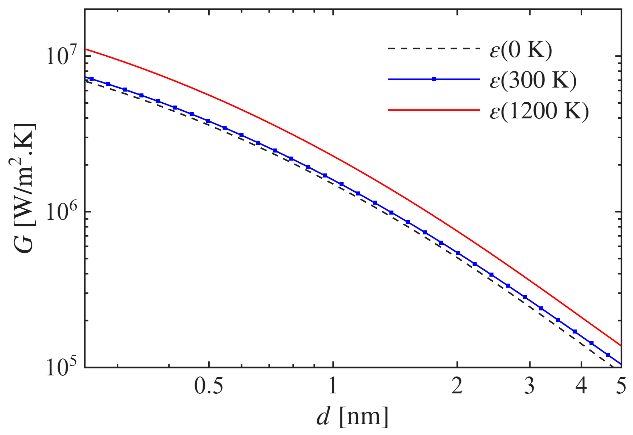
Using ground-state dielectric properties underpredicts the radiative conductance by 32–43% at 1200 K. Neglecting phonon anharmonicity underpredicts the conductance by up to 25.6% at 750 K. These results show that temperature-dependent material properties are essential for accurate heat-transfer predictions in the extreme near-field regime.
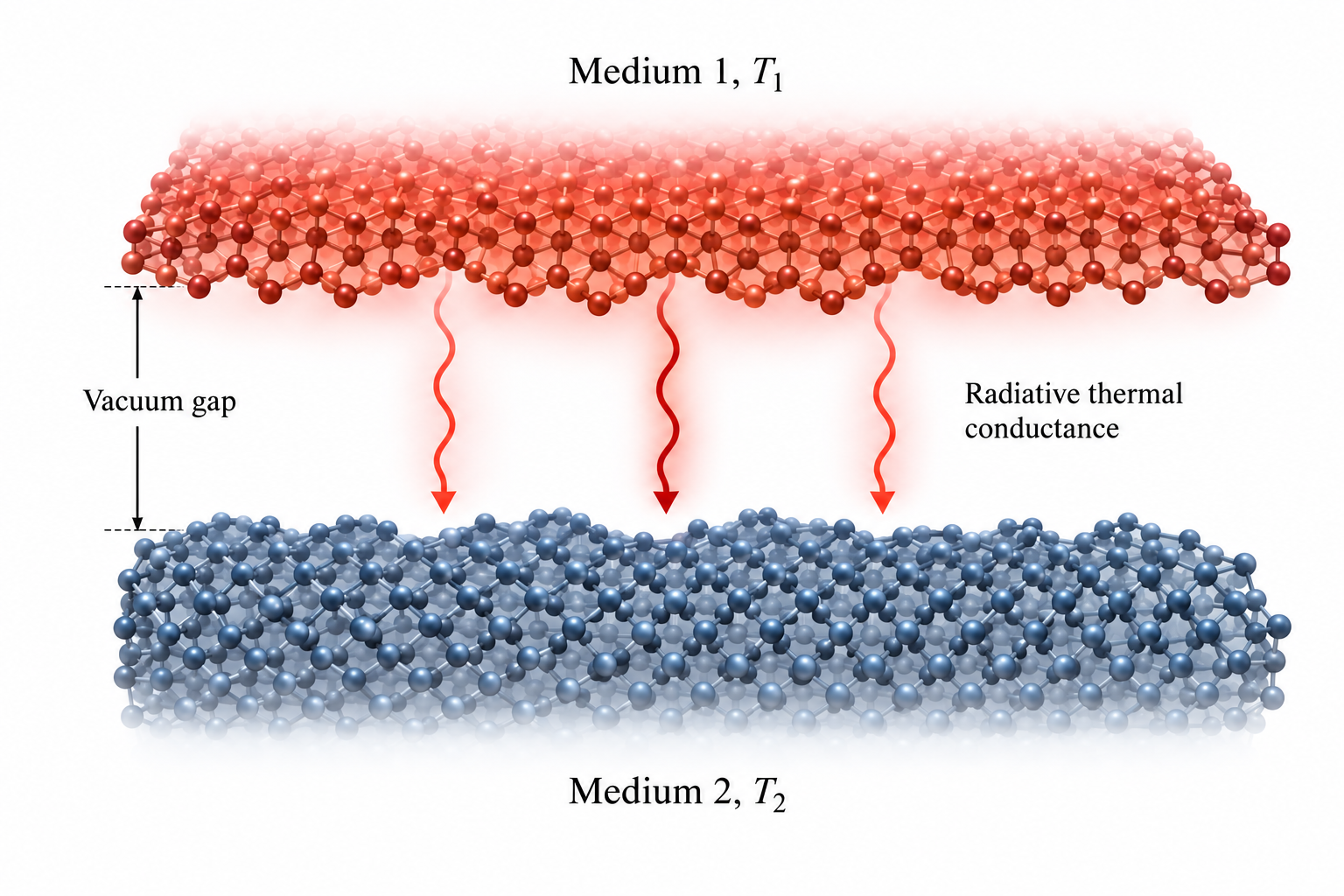
Two media at slightly different temperatures separated by an atomic-scale vacuum gap, exchanging radiative heat
Schematic of radiative heat transfer across an atomic-scale vacuum gap between two media.
Radiative conductance versus gap size computed using dielectric functions at 0 K, 300 K, and 1200 K
Radiative conductance calculated using dielectric properties at 0, 300, and 1200 K. Ground-state properties substantially underpredict the conductance at 1200 K.
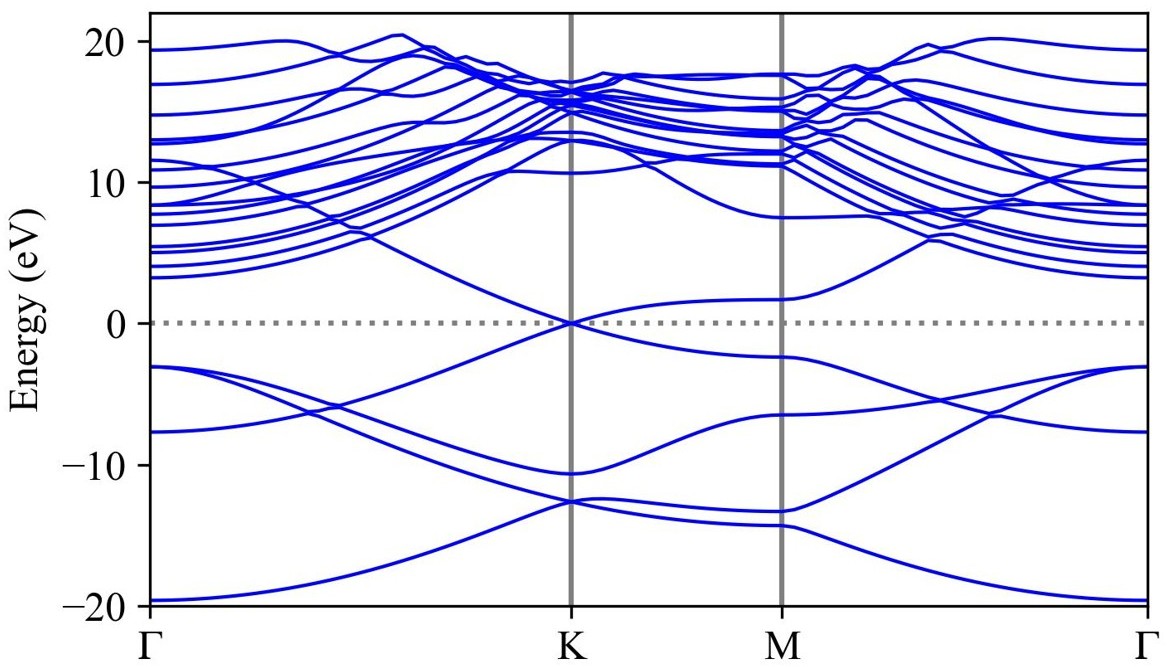
First-principles electronic band structure of graphene along the Gamma-K-M-Gamma path, with the valence and conduction bands meeting at the K point
Electronic band structure of graphene along Γ–K–M–Γ, showing the valence and conduction bands meeting at the Dirac point.
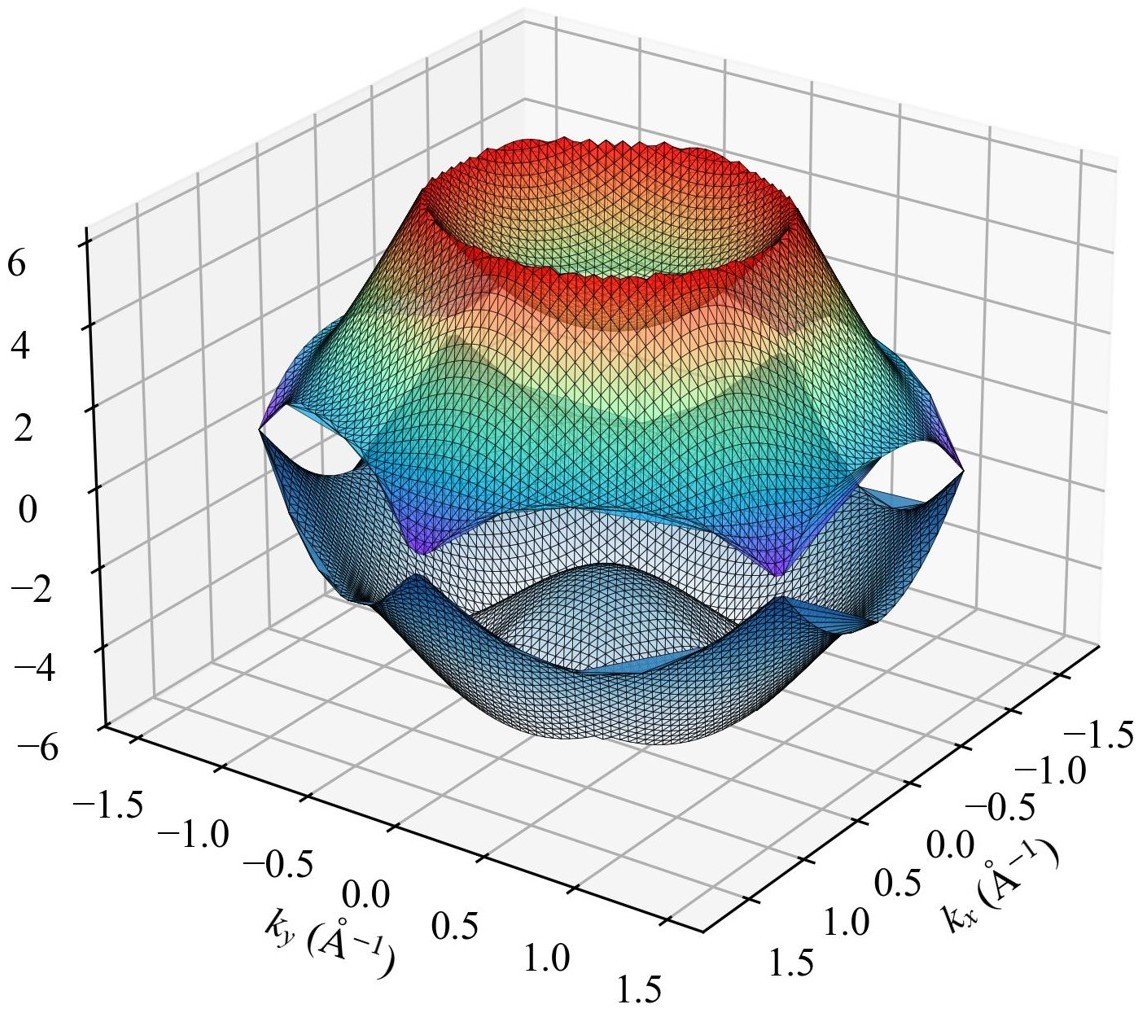
Three-dimensional surface plot of graphene's electronic bands over the first Brillouin zone, with valence and conduction bands touching at the Dirac points
Three-dimensional view of the graphene band structure over the first Brillouin zone, showing the Dirac points where the valence and conduction bands meet.
First-principles prediction of dielectric properties at finite temperature.
A Comprehensive Framework for Predicting the Infrared Dielectric Function at Finite Temperatures from First Principles (in preparation)

Methods & tools: DFT, DFPT, SDM/ASDM, Quantum ESPRESSO, EPW, Yambo, HPC

Problem

Dielectric properties are commonly calculated for the equilibrium crystal structure, although the material itself changes with temperature. Thermal lattice vibrations modify the atomic positions, phonons, electronic structure, and ultimately the dielectric response. Experimental data are also not available for every material and operating temperature.

What I did

I developed a first-principles workflow to calculate the frequency-, wavevector-, and temperature-dependent dielectric response. The workflow generates temperature-dependent atomic configurations using harmonic or anharmonic phonons, recalculates the electronic structure at the target temperature, and then evaluates the dielectric tensor. I applied the same framework to graphene, silicon, and gold.

Result

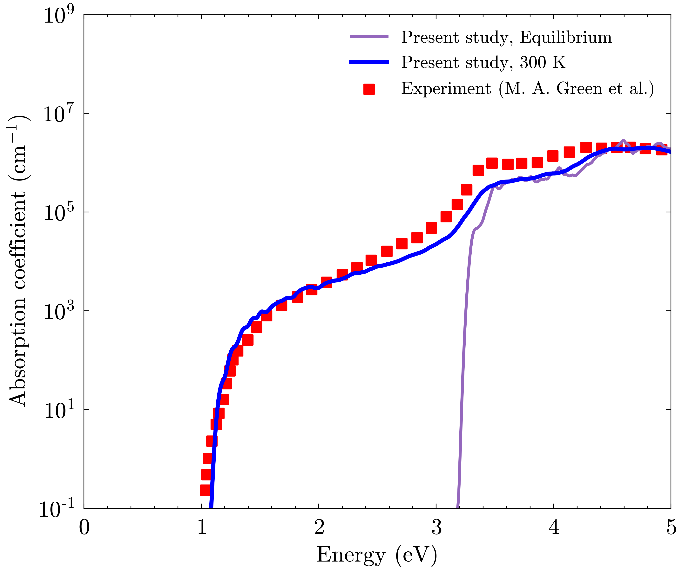
The calculations show that lattice vibrations can change the dielectric response substantially, even near room temperature. For silicon, the 300 K calculation reproduces the experimental absorption onset near 1.1 eV, while the equilibrium structure misses the low-energy phonon-assisted absorption. For graphene, the dielectric response changes strongly with temperature, and the anharmonic contribution becomes increasingly important at higher temperatures.
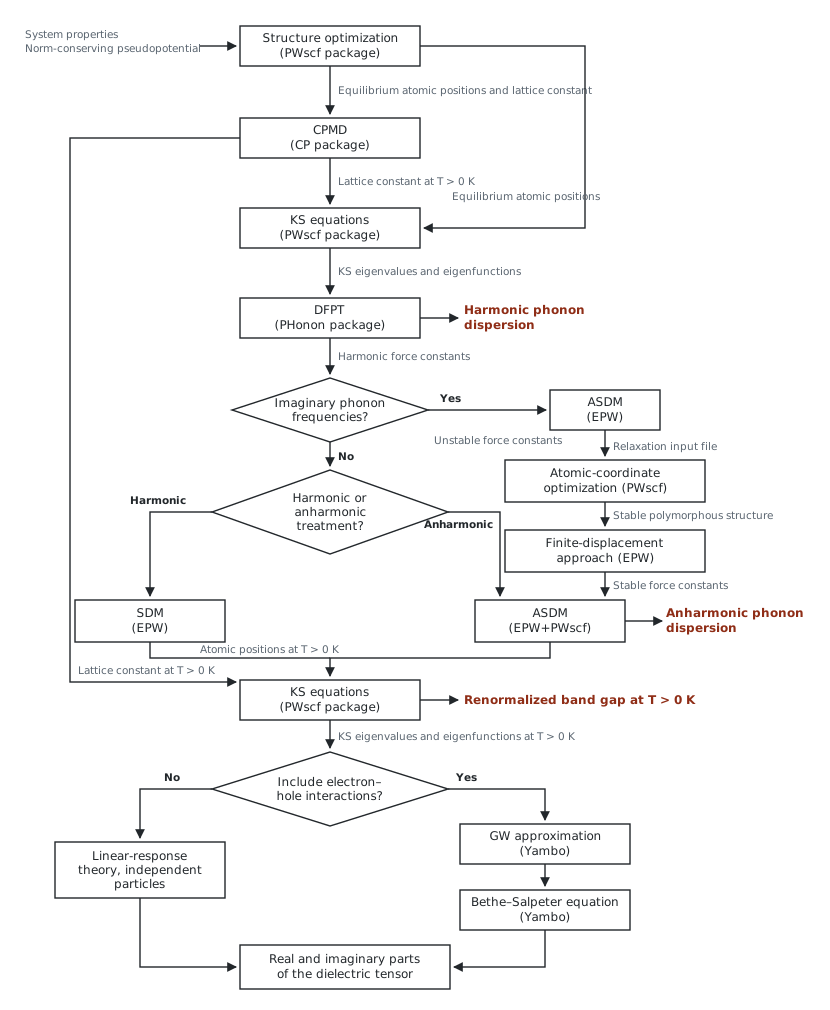
First-principles workflow for calculating temperature-dependent dielectric properties using Quantum ESPRESSO, EPW, and Yambo
First-principles workflow for calculating temperature-dependent dielectric properties, from structure optimization and phonons to the final dielectric response.
Calculated silicon absorption coefficient at 300 K compared with experiment and the equilibrium static-lattice result
Silicon absorption at 300 K compared with experiment. Including finite-temperature lattice effects recovers the low-energy absorption that is absent in the equilibrium calculation.
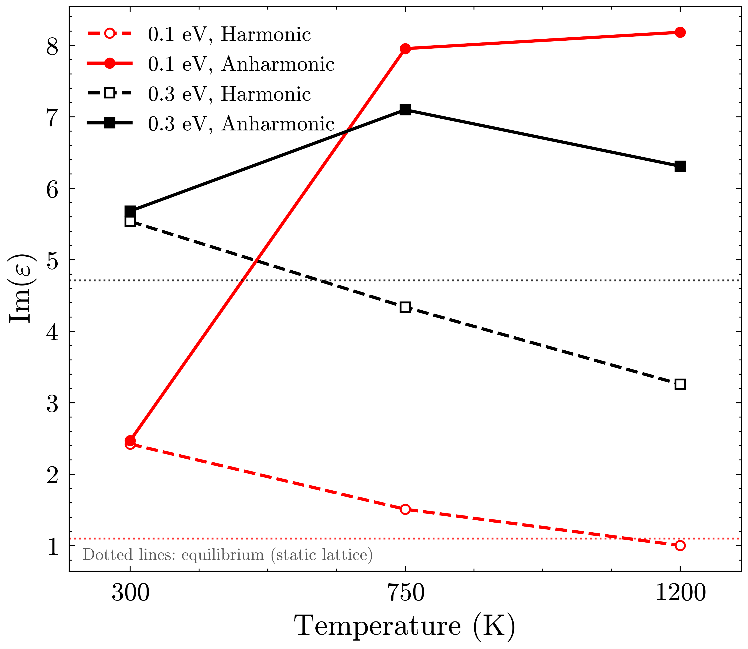
Imaginary part of graphene dielectric function at 0.1 and 0.3 eV as a function of temperature for harmonic and anharmonic calculations
Temperature dependence of graphene's dielectric response at 0.1 and 0.3 eV. Harmonic and anharmonic predictions begin to separate as temperature increases, while both differ from the equilibrium static-lattice values.
Phonon heat transfer across sub-nanometer gaps in 2D materials.
Phonon Thermal Transport between Two In-Plane, Two-Dimensional Nanoribbons in the Extreme Near-Field Regime · Physical Review B 109, 235411 (2024) · DOI

Code: documented Python scripts for the phonon transmission calculations are available on GitHub. The original MATLAB implementation is available on request.

Methods & tools: Atomistic Green's function (AGF), Tersoff and Lennard-Jones potentials, MATLAB, HPC

Problem

Phonon transport across extremely small vacuum gaps had been studied for bulk dielectric, semiconductor, and metallic materials, but not for two-dimensional materials. Understanding this transport is important for predicting thermal resistance created by nanoscale gaps, cracks, and voids in 2D materials.

What I did

I modeled phonon heat transfer between graphene and silicene nanoribbons separated by sub-nanometer vacuum gaps using the atomistic Green's function method. Interactions within the nanoribbons were described with the Tersoff potential and interactions across the gap with the Lennard-Jones potential. I also verified the AGF implementation against three independent results from the literature before applying it to the 2D systems.

Result

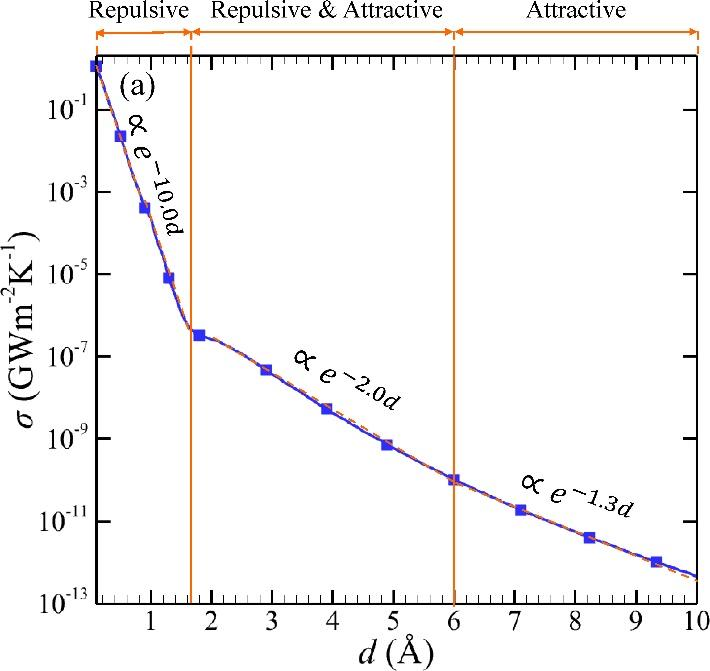
A gap of only 0.2 Å reduces the phonon conductance by more than one order of magnitude. For graphene, the conductance follows three exponential decay regimes as the dominant interaction changes from repulsive forces, to combined repulsive and attractive forces, and finally to van der Waals attraction. Silicene conductance decreases more slowly and exceeds graphene beyond a gap of about 0.8 Å.
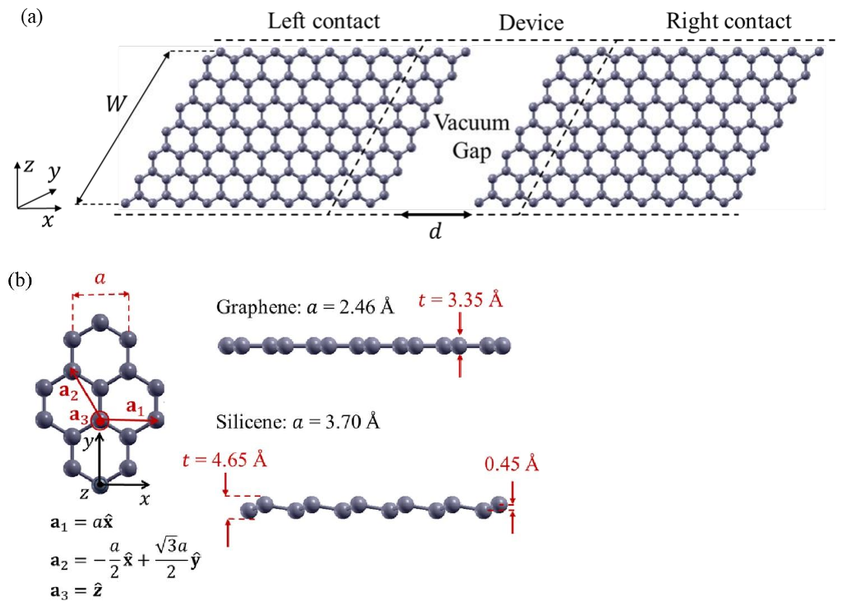
Two in-plane graphene or silicene nanoribbons separated by a sub-nanometer vacuum gap for atomistic Green's function calculations
Two in-plane 2D nanoribbons separated by a sub-nanometer vacuum gap. The gap is treated as the device region in the atomistic Green's function model.
Phonon conductance versus vacuum gap size for graphene showing three exponential decay regimes
Phonon conductance decreases exponentially with gap size in three regimes, reflecting the change from repulsive to mixed and then attractive interatomic interactions.

Prior research: CFD

Mixed convection with rotating cylinders in a heated enclosure.
Effect of Parameters of Rotating Cylinders on the Heat Transfer Advancement · Journal of Heat Transfer 144, 022601 (2022) · DOI

Methods & tools: Finite element method, conjugate mixed convection

Problem

Rotation can change both the flow field and heat transfer inside an enclosure, but the effects of rotation direction, cylinder spacing, material, and speed ratio must be considered together when two conductive cylinders are present.

What I did

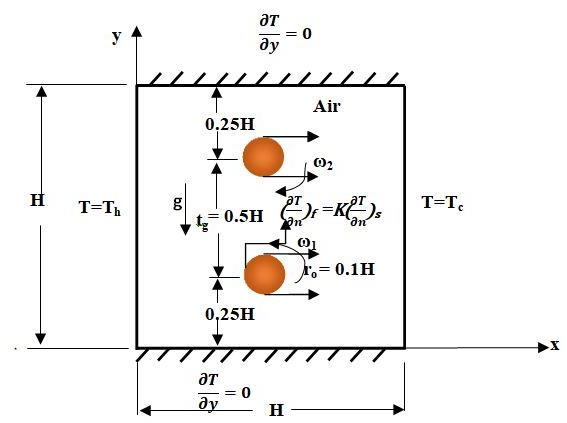
I modeled conjugate mixed convection in a differentially heated square cavity containing two vertically aligned rotating cylinders. The simulations covered Reynolds numbers from 1 to 10,000, four combinations of rotation direction, three cylinder spacings, five cylinder materials, and different speed ratios. The rotating cases were also compared with stationary cylinders.

Result

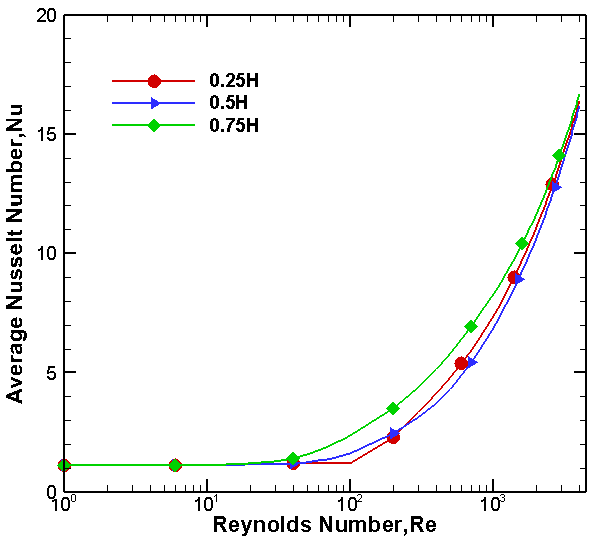
Counterclockwise rotation of both cylinders produced the highest heat transfer among the four rotation combinations, giving 2.63% higher heat transfer than the clockwise-clockwise case. A spacing of 0.75H gave 2.17% higher heat transfer than 0.5H, while changing the cylinder material had little effect on the overall flow and thermal fields. For the 0.75H case, rotating cylinders increased heat transfer by about 4% compared with stationary cylinders.

Differentially heated square cavity containing two vertically aligned rotating conductive cylinders
Computational domain used to study conjugate mixed convection with two rotating conductive cylinders.
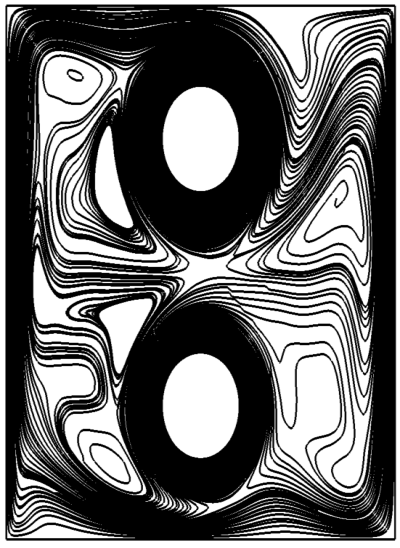
Streamlines for different rotation directions of two cylinders inside a heated square cavity
Rotation direction changes the circulation pattern inside the cavity and, in turn, the heat transfer at the heated wall.
Average Nusselt number versus Reynolds number for three vertical spacings between rotating cylinders
Average Nusselt number versus Reynolds number for three cylinder spacings. The 0.75H configuration gives the highest heat transfer at larger Reynolds numbers.
Effect of wall material and surface corrugation on conjugate natural convection.
Evaluation of Overall Thermal Performance for Conjugate Natural Convection in a Trapezoidal Cavity with Different Surface Corrugations · International Communications in Heat and Mass Transfer 130, 105772 (2022) · DOI · 44 citations

Methods & tools: Finite element method, COMSOL Multiphysics, conjugate natural convection

Problem

In enclosures with a thick conducting wall, heat transfer depends on both the wall material and the shape of the solid-fluid interface. Their combined effect had not been systematically compared for a trapezoidal cavity with different surface corrugations.

What I did

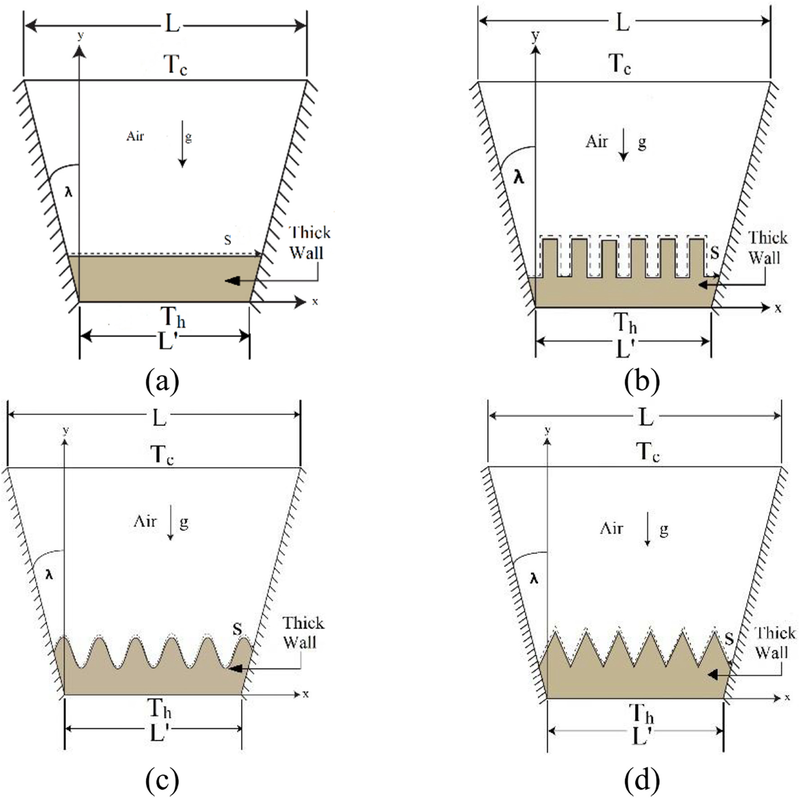
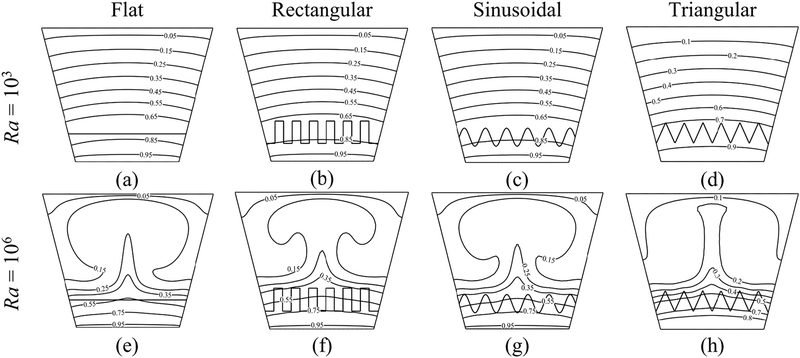
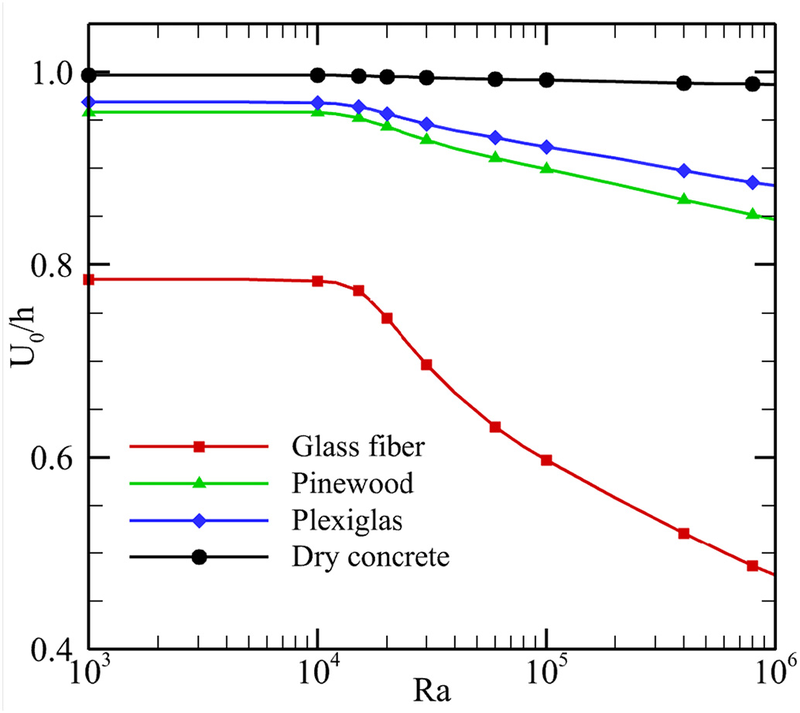
I simulated conjugate natural convection in an air-filled trapezoidal enclosure using four bottom-wall profiles—flat, rectangular, sinusoidal, and triangular—and four wall materials: glass fiber, pinewood, plexiglas, and dry concrete. Rayleigh number was varied from 103 to 106, and the analysis included Nusselt number, fluid temperature, flow and temperature fields, and overall thermal performance.

Result

Conduction dominates at Ra ≤ 104, while convection strengthens rapidly at higher Rayleigh numbers. For convection alone, the flat surface with glass fiber gives the highest average Nusselt number. When conduction through the wall and convection in the fluid are considered together, dry concrete performs best overall, with the triangular corrugation giving the highest overall thermal performance at low Rayleigh number.

Four trapezoidal cavities with flat, rectangular, sinusoidal, and triangular bottom-wall profiles
The four bottom-wall profiles compared in the study: flat, rectangular, sinusoidal, and triangular.
Temperature contours in the trapezoidal cavity at low and high Rayleigh numbers
Temperature contours show the transition from conduction-dominated behavior at low Rayleigh number to stronger natural convection at high Rayleigh number.
Overall thermal performance for different wall materials and corrugated surface profiles
Overall performance depends on both wall conductivity and surface shape; the best combination is not the same as the one that maximizes convection alone.
Heating strategy and entropy generation in a nanofluid-filled prismatic cavity.
Entropy Analysis due to Conjugate Natural Convection in Water-Al₂O₃ Nanofluid Filled Prismatic Cavity · AIP Conference Proceedings 2324, 050022 (2021) · DOI

Methods & tools: Finite element method, water-Al₂O₃ nanofluid modeling, COMSOL Multiphysics, entropy generation analysis

Problem

The heating pattern applied to a conducting wall changes both natural-convection heat transfer and thermodynamic irreversibility. For a prismatic cavity filled with nanofluid, the effect of different wall-heating profiles on both heat transfer and entropy generation had not been established.

What I did

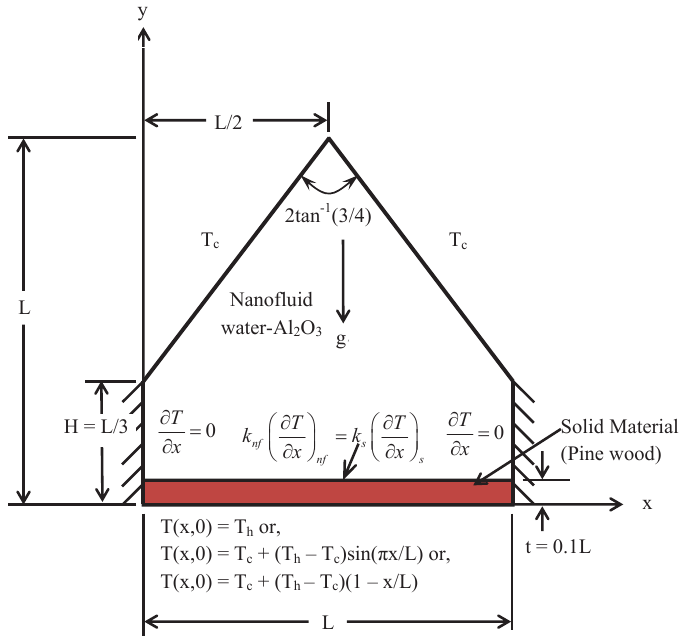
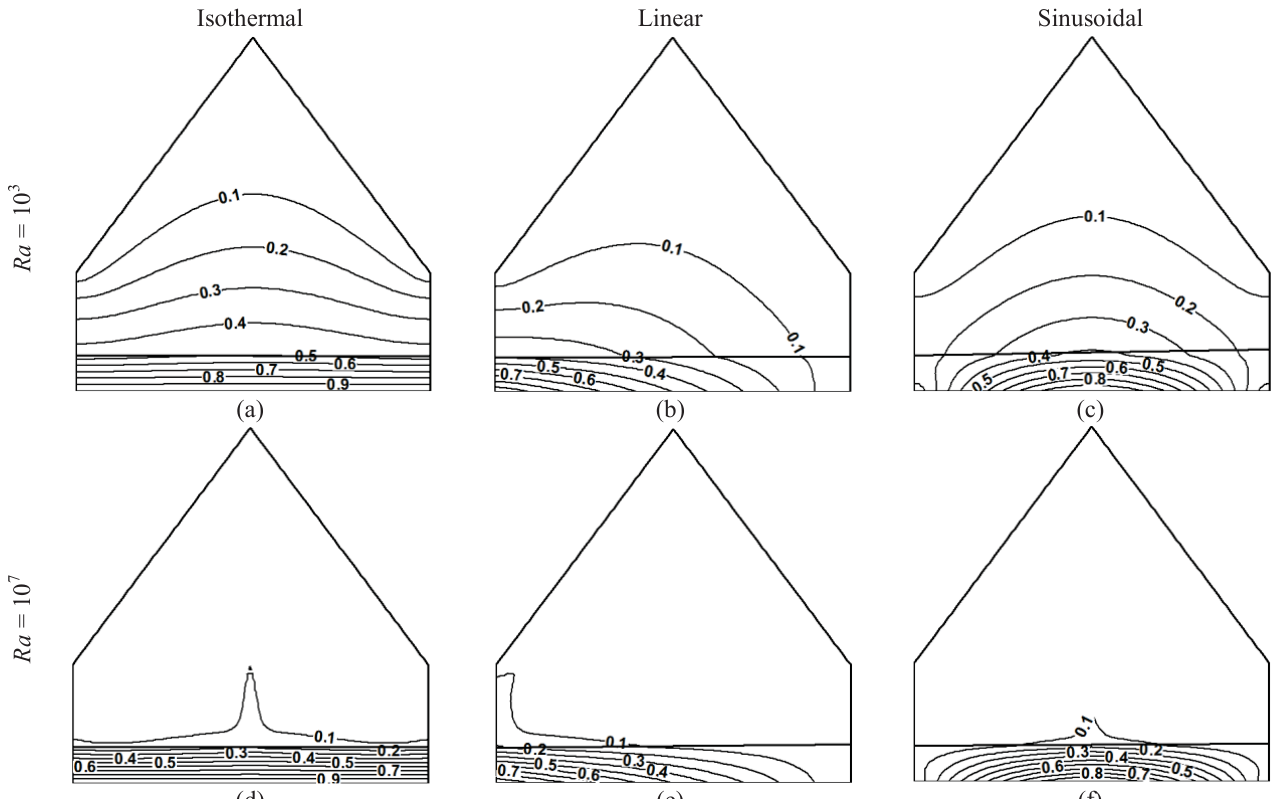
I solved conjugate natural convection in a prismatic cavity filled with water-Al₂O₃ nanofluid and bounded by a thick pinewood bottom wall. Three heating conditions—isothermal, linear, and sinusoidal—were compared over Rayleigh numbers from 103 to 107. The analysis tracked the flow and temperature fields, average Nusselt number, and total entropy generation.

Result

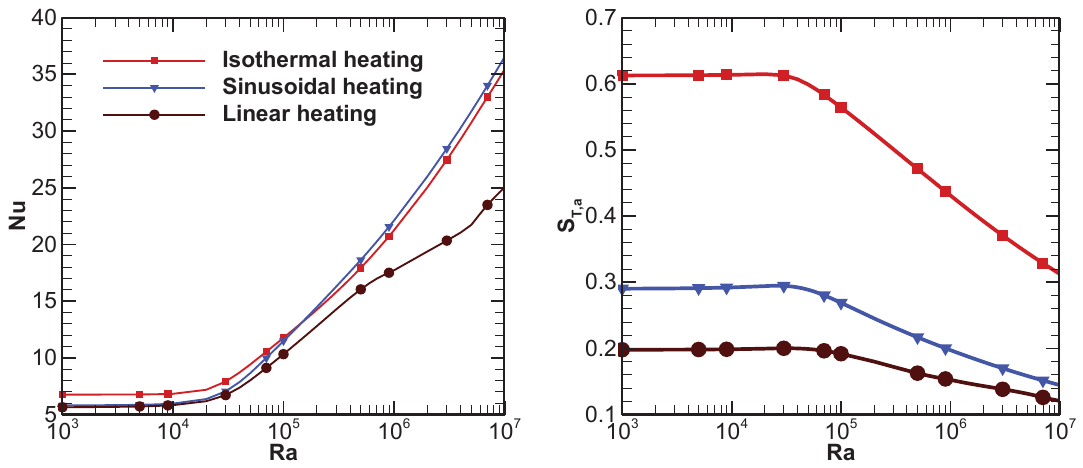
At Ra ≥ 2×10⁵, sinusoidal heating gives the highest heat transfer as convection becomes dominant, while linear heating remains the least effective over the range studied. Total entropy generation increases with Rayleigh number and is highest for the isothermal heating condition. Up to about Ra = 3×10⁴, entropy generation changes very little with Rayleigh number.

Prismatic cavity filled with water-alumina nanofluid over a thick conducting bottom wall with three heating profiles
Prismatic cavity with a thick conducting bottom wall and three imposed heating profiles: isothermal, linear, and sinusoidal.
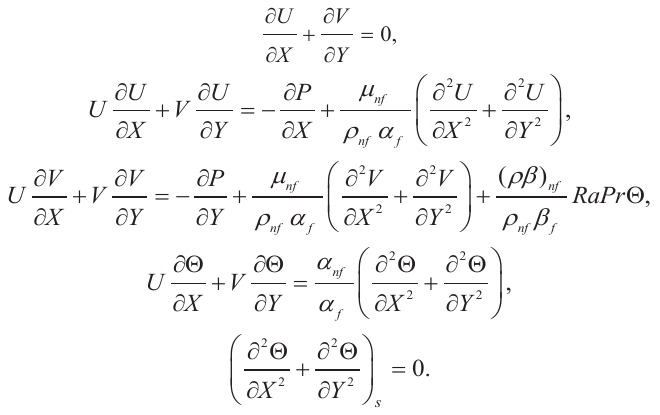
Dimensionless governing equations for conjugate natural convection in the nanofluid-filled prismatic cavity
Governing mass, momentum, and energy equations used for the coupled solid-fluid heat-transfer model.
Temperature contours for isothermal, linear, and sinusoidal heating at different Rayleigh numbers
Temperature fields for the three heating conditions. Increasing Rayleigh number strengthens circulation and changes the thermal boundary layer.
Average Nusselt number and total entropy generation versus Rayleigh number for three heating conditions
Average Nusselt number and total entropy generation versus Rayleigh number. Sinusoidal heating gives the highest heat transfer at high Ra, while isothermal heating produces the greatest entropy generation.

These are selected papers. The complete list is on Google Scholar.